Posts

So much for taking back control. Hywel Davies, CIBSE Technical Director, highlights some concerns about the EU Withdrawal Bill.

Image
Post Brexit, the Government’s message was that all EU legislation will be copied into domestic UK law to ensure a smooth transition and to avoid a “black hole in our statute book” on the day after the UK leaves the European Union. This was the promise of the White Paper on leaving the EU, which was published in March 2017. To deliver this, the European Union (Withdrawal) Bill is the key plank of legislation, which sets out to replace the 1972 European Communities Act. However, ClientEarth, an organisation of activist lawyers committed to protecting the environment, has looked at the draft of the Withdrawal Bill and it has raised some serious concerns that in its current format not everything in EU law will be transposed into UK law. In relation to fully transferring current EU requirements into UK law, there has been a long running issue over the status of the text of Regulations and Directives which precedes the numbered Articles. This text appears in numbered paragraphs kn...

Transforming a Slough waste-recycling centre using Green Infrastructure

Image
As Green Infrastructure Design Challenge 2017 winners we’ve been invited to share our experience of being involved in the competition which was part of Green Sky Thinking Week 2017 , so here goes …. We are Louise and Stephen Handley, Landscape Designers at Amey plc . I must admit Stephen ‘fell’ upon the competition whilst ferreting through the Landscape Institute website. We don’t usually have time to enter competitions, but the brief for the Green Infrastructure Design Challenge corresponded closely with a project we were working on for Amey, and as designers anything that allows you to play with a project is welcome! The live project was a planning application to convert a piece of land near our offices to an additional car park, extra spaces being needed because our offices are merging with the local authority and an increase in staff will follow. The site is currently green (e.g. grass) and acts as a flood defence for the adjacent stream - the area being in a 1 in 100 chan...

Plan - Do - Check - Act

Image
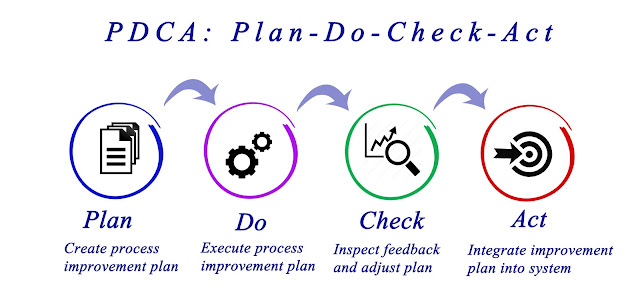
Many UK businesses are looking to increase efficiency and reduce energy costs. Whether as part of an overall corporate strategy, a route to organisational efficiency or a key focus of a cost or carbon reduction drive, monitoring and managing your energy use effectively makes sound business sense. But what steps can companies take to manage their energy use? CIBSE takes a look at ISO 50001 and the business opportunities associated with it. ISO 50001, the globally recognised energy management standard developed by the International Organisation for Standardisation, is the key tool in that process. It provides a framework for effectively managing the energy that an organisation uses in its premises. It helps organisations understand where they are using energy, how that energy use can be managed effectively, and how consumption and costs can be controlled into the future. The standard is effectively a framework to: Develop policies and approaches for the more efficient use of ene...

Leading lights

Image
Local authorities have cottoned on to the cost benefits of LED lighting in our streets, and in government owned buildings across their portfolio. But to what extent can LEDs help squeezed budgets? Society of Light and Lighting Secretary Brendan Keely takes a look. Just under a year ago, the UK Government affirmed its commitment to the 5 th Carbon Budget which binds it to a target of 57% cut in carbon emissions by 2032 – with a view to an 80% cut by 2050. This is a refreshingly ambitious target, but according to Dr Hywel Davies of the Chartered Institution of Building Services Engineers (CIBSE) it will mean that the Government must maintain all of its current climate policies and find further ways to make cuts if it is to stand any chance of hitting this goal. This means the Government is going to have to get creative in order to eke out savings above and beyond what it is already doing. Last year I wrote that a great way of cutting down on emissions is to target the 180,000 gov...

New horizons

Image
With the launch of the new CIBSE UAE region, CIBSE is preparing for a rush of new activity in the area from all over the built environment. We take a look at some of that activity with Society of Public Health Engineering's UAE representative Andy Russell , who reports on the launch of their UAE chapter After months of planning a SoPHE UAE launch event was held at the Dubai World Trade Centre Club on Level 33 overlooking downtown Dubai on the 8th March. SoPHE UAE was conceived in October 2016 with Andrew Russell of Hilson Moran, Simon Lewin of WSP Parsons Brinckerhoff and Keith Perry of Polypipe taking lead roles for SoPHE in the region. The partnership and collaboration between the three individuals and their organisations will be key to raising the standards of PHE design and profile of SoPHE in the region. As a landmark in the UAE this iconic building opened in 1979 and the 39-storey Sheik Rashid Tower is featured on the 100 dirham bank note. As Dubai’s first skyscraper it r...

A business plan

Image
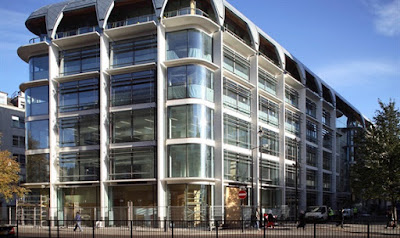
British Land  has won four CIBSE Building Performance Awards in the last five years, most recently for energy efficiency improvements to its property portfolio. With entries open for the 2018 Awards ,  Sara Kassam, CIBSE’s Head of Sustainability Development, sets out to understand why energy efficiency is so important to the property company. When British Land won the Client Energy Management category at the 2012 CIBSE Building Performance Awards the property company had achieved a 15% reduction in like-for-like landlord energy use across its office and retail properties and was targeting a 20% reduction in energy intensity per square metre across its entire portfolio. Five years on and British Land won the ‘ Test of Time ’ category at this year’s CIBSE Building Performance Awards for continued energy performance. It won this accolade for a 40 % portfolio-wide reduction in carbon intensity (scope 1 and 2) relative to 2009 levels, a 38% reduction in landlord energy ...

Bright future

Image
With record June temperatures and the launch of CIBSE's new TM59 , the built environment is starting to get tough on overheating. Sara Kassam, Head of Sustainability Development at CIBSE , takes a look at a paper presented at this year’s CIBSE Technical Symposium set out to evaluate both the overheating risk and suggest appropriate mitigation strategies Retrofitting homes and building new homes with high levels of fabric insulation, is a key tenet of the UK government’s carbon emissions reduction strategy. But, while a well insulated home may require very little heating in winter, without minimizing solar gains and without the implementation of sufficient ventilation strategies, in the summer, high levels of insulation can increase the likelihood of a home overheating.  Research by the University of Sheffield, based on computer modelling, has shown that with increased levels of insulation overheating is a problem, one that is set to get worse under the impact of climate ch...